My first month, mostly in Dublin
I joined Small Caps in Copenhagen in July and spent most of my first month in Dublin, building the page you see when you scan a plaque. What the two studios are like, what a quay is, and the afternoon a retired architect fixed a page in the rain.
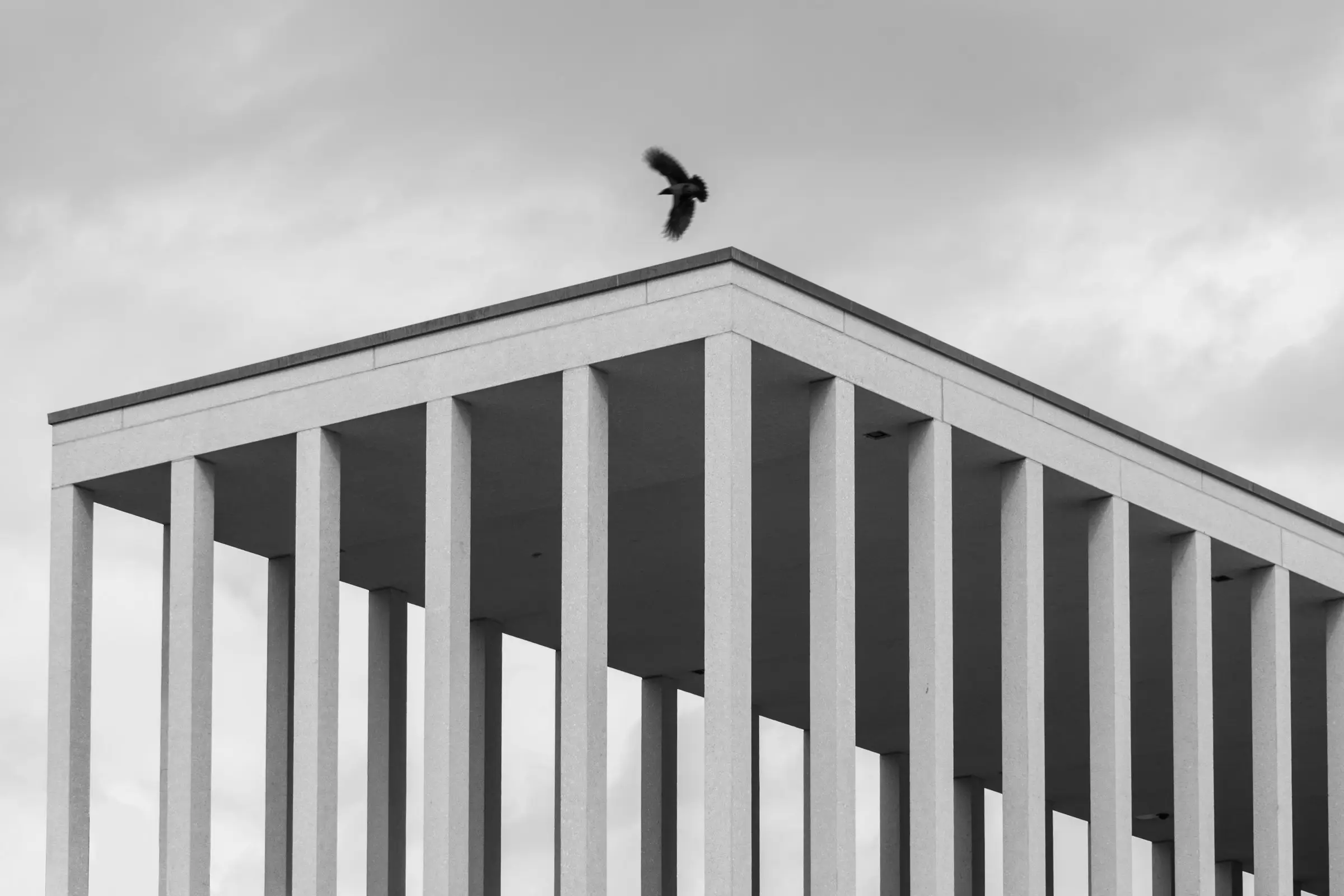
I joined Small Caps on the first of July. On the second of July, Leela handed me a laptop, a guide to Dublin's modern buildings, and a plane ticket.
"The Register needs someone in the room," she said. "And you'll learn faster there."
She was right on both counts. This is what I learned.
A studio of two halves
I had only seen the Dublin studio on the Monday video call, where it looks like a bookshelf with Callum in front of it. In person it's a first-floor room on a Georgian street, with very tall windows, a kettle that is never cold, and a whiteboard that still has Aoife's diagram from the modelling workshop on it, because nobody is allowed to wipe it.
The two studios work differently. Copenhagen is quiet and deep: long stretches of building, music in headphones, and a pug asleep under a printing press. Dublin is louder and more social. People read things out to each other. Callum reads everything out to everyone, usually a sentence he has just improved.
I think the project needs both. The model and the words came from Dublin; the pipeline and the design came from Copenhagen. I spent the month in between, translating.
What I built
My job for the month was the building page: the page you get when you scan a plaque's code, or tap a building on a walk. It shows one building, its architects and its street. In practice, that means it pulls from three places at once:
The building: its official name in small caps, the names people actually use, the year, the status, the photographs, and the note.
The architects: their names, their years, and their other buildings nearby.
The street: its name, a small map, and the buildings next door, in the order you would pass them.
It's a page that only makes sense because the model separated those three things. On the card index, it was eleven typed lines and a pencilled back, and if you wanted the architect's other buildings you opened another drawer.
Most people will see this page on a phone, standing on a pavement, often on a walk. So it is small: no web fonts beyond the two we use everywhere, every image sized for the screen asking for it, and nothing on the page that waits for anything else. On a slow connection, it loads before you have finished lowering the phone.
The day Declan edited a page
The moment I understood the project was a Thursday afternoon on the quays. Declan, the retired architect who wrote most of the cards, was walking me along Walk 3, and he stopped at a 1950s office block and said its note was wrong: it said the ground floor had been changed in 1985, but it hadn't, it was the building next to it.
He took his phone out of his jacket, opened the building, fixed the sentence, and published it. By the time we had crossed to the next building, the page had rebuilt and the code on the plaque showed the corrected note.
He didn't post a card to anybody. Nobody waited weeks for a drawer to be updated. That is the whole project, really, and he did it in the rain without noticing.
Things I learned in Dublin
A quay is a street along the river, pronounced "key". I said it the other way for a week. Everyone was very kind about it.
Dublin buses come when they feel like it. Bring a book.
Every official name on the cards is a small history lesson. Callum is going to tidy them all up in September and I suspect he will enjoy it more than he admits.
Irish rain is not like Danish rain. It's softer and it never quite stops.
I'm back in Copenhagen now. Noir has decided to tolerate me, which Elias says is a big step. I've been told launch is in early October, and that I will be going back to Dublin for it.
I've already packed the raincoat.